
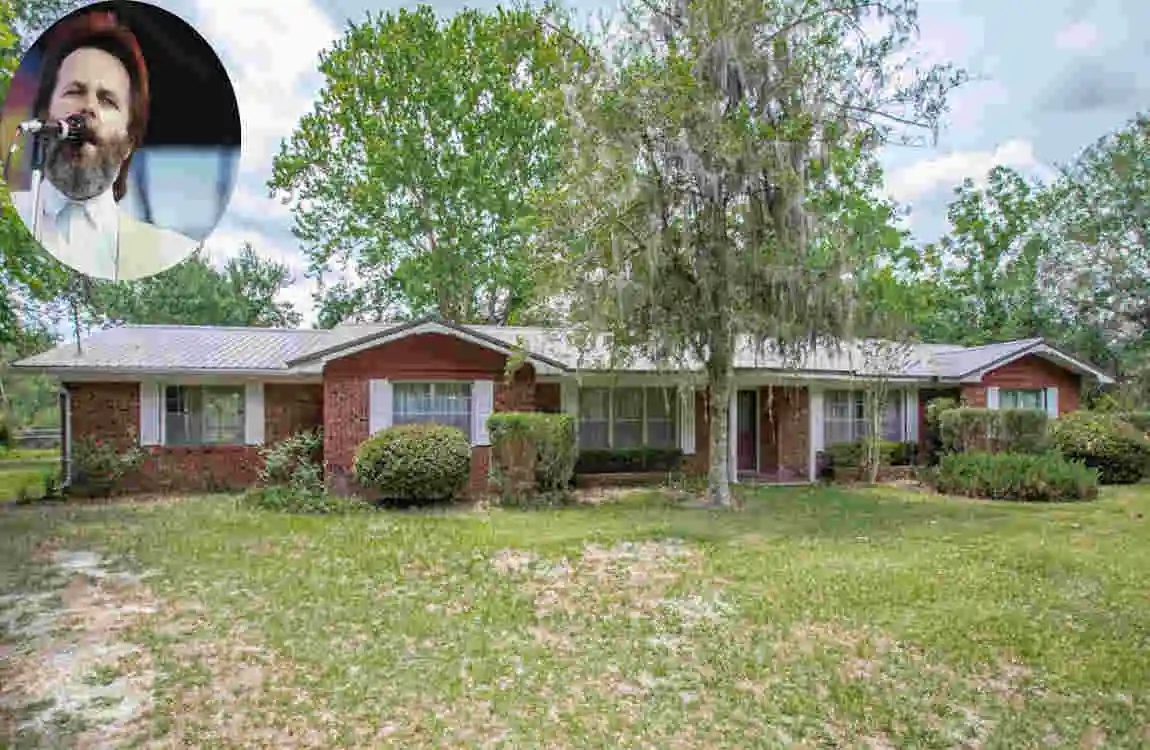
The Carl Wilson House stands as a remarkable testament to early 20th-century Colonial Revival architecture, blending historic charm with the aspirations of modern luxury real estate. Nestled at 860 University Avenue in Palo Alto, this historic landmark has captured the hearts of architecture enthusiasts, historians, and investors alike. From its inclusion in the National Register of Historic Places in 1980 to its enduring appeal in Palo Alto’s fast-paced real estate market, this house is a timeless treasure.
Architectural Highlights
The Carl Wilson House is a quintessential example of Colonial Revival architecture, a style that was highly popular in the United States between the late 19th and early 20th centuries. Its design reflects both the era’s aesthetic ideals and the craftsmanship of master builders.
Colonial Revival Features
The house is a wood-frame structure with a hipped roof, flared eaves, and carefully proportioned dormer windows. Its clapboard siding is divided into narrow upper panels and wider lower panels, adding texture and visual interest.
One of the defining characteristics of Colonial Revival homes is their emphasis on symmetry and balance, and the Carl Wilson House is no exception. The facade is meticulously designed to create a sense of harmony, with each architectural element complementing the others.
This home stands out as one of Palo Alto’s finest examples of the Colonial Revival style from 1895–1915, showcasing the elegance and attention to detail that define the era.
Standout Details
Among the home’s most striking features is the two-story, rounded bay window, complete with stained glass panels that cast colorful patterns of light across the interior. This bay window is not only a visual centerpiece but also a testament to the craftsmanship of the time.
The property also includes several outbuildings, such as a stable/carriage house and a gardener’s cottage, which further enhance its historic charm. These structures reflect the lifestyle of the early 20th century, when homes of this caliber often included amenities for staff and horses.
The influence of architect Gustav Laumeister can be seen in details like the coved ceilings and fir paneling, which add warmth and character to the interior spaces.
Interior and Preservation
The interior of the Carl Wilson House is a masterclass in early 20th-century design, with original woodwork and craftsmanship that have stood the test of time.
Original Woodwork Glory
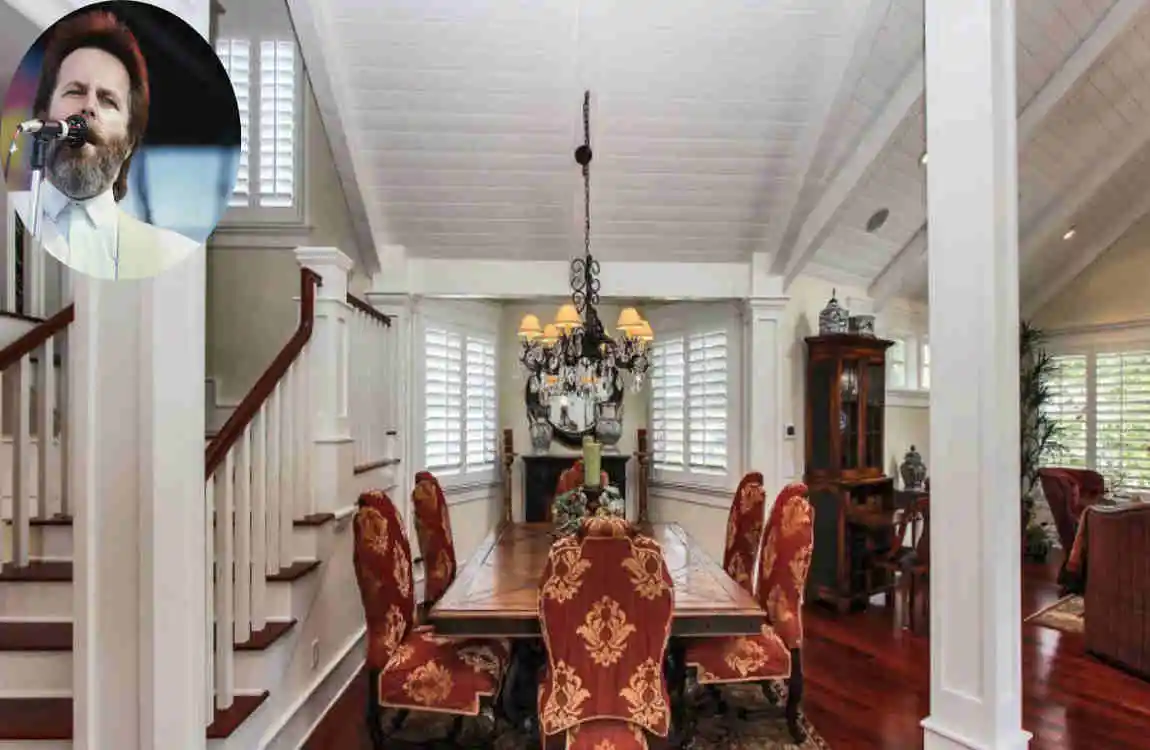
Walking into the house feels like stepping back in time. The extensive paneling, integrated staircase-hallway designs, and ornate moldings speak to the optimism and artistry of the early 1900s. The current owners have gone to great lengths to preserve these features, allowing visitors to appreciate the home’s historical authenticity.
The staircase, for example, serves as both a functional element and a work of art, with its intricate balustrades and polished wood finish. Every corner of the house tells a story, from the hand-carved details to the carefully preserved stained glass.
Modern Stewardship
Preserving a historic property like the Carl Wilson House comes with its own set of challenges. The wrought iron fence that surrounds the property, along with the lush greenery that provides privacy, requires constant maintenance to ensure it remains true to its original design.
Additionally, the owners have had to navigate the complexities of maintaining a home that is both a private residence and a piece of public history. Their efforts underscore the importance of balancing modern needs with historic integrity.
Cultural Significance Today

The Carl Wilson House is more than just a historic landmark; it is a symbol of Palo Alto’s rich cultural tapestry and its commitment to preserving the past while embracing the future.
Palo Alto Context
As Palo Alto continues to thrive as a hub for technology and innovation, the Carl Wilson House serves as a reminder of the city’s roots. It appeals to buyers and investors who value historic charm and the prestige of owning a piece of history.
The house is also an example of broader trends in adaptive reuse, where historic properties are updated to meet modern needs without compromising their character.
Visitor and Tourism Draw
While the Carl Wilson House is a private residence, its exterior can be admired from University Avenue, making it a popular stop for history enthusiasts and architecture lovers. Nearby attractions, such as the shops and restaurants along University Avenue, provide additional reasons to visit this charming area.
Comparisons and Influences
The following table highlights the unique features of the Carl Wilson House compared to other Colonial Revival homes in Palo Alto.
Feature Carl Wilson House Typical Palo Alto Colonial Revival
Build Year 1906 1895–1915
Key Detail, Rounded stained glass bay, Standard dormers
Scale Large, impressive, Varied, often smaller
Outbuildings, Stable + gardener’s cottage, Rare
Where Does Carl Wilson Currently Live?
Carl Wilson, the Beach Boys guitarist and co-founder, passed away on February 6, 1998, from lung cancer in Los Angeles, California.
