
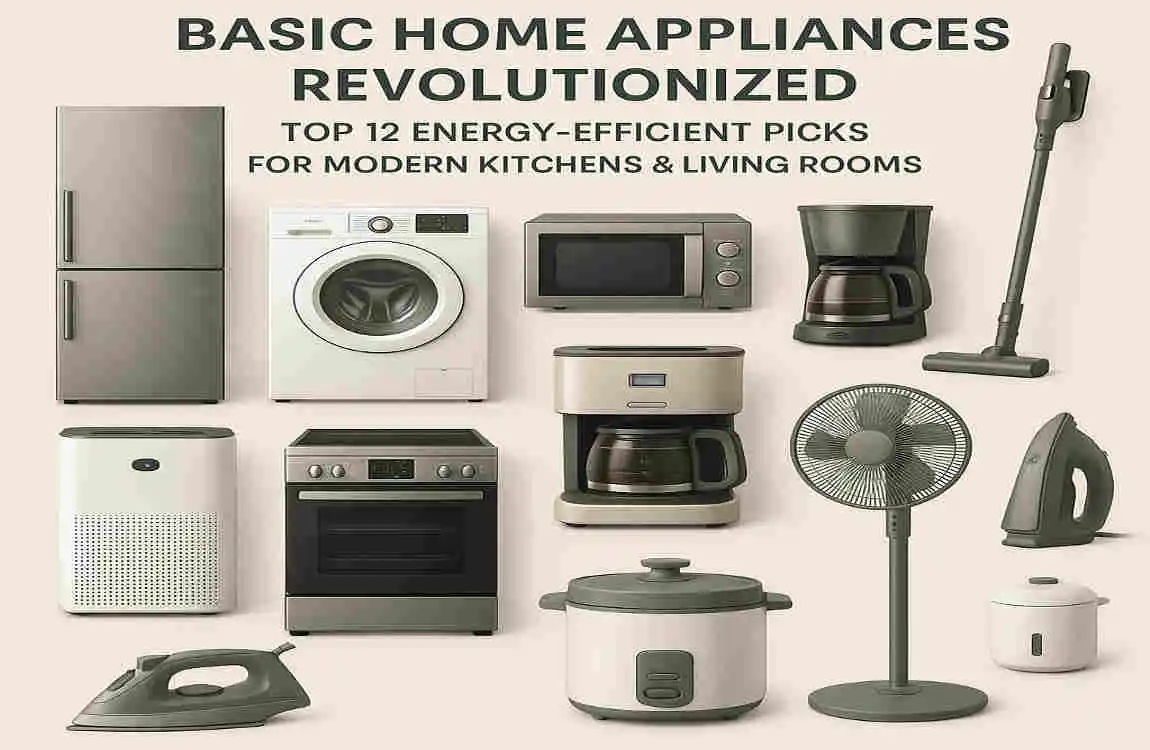
Households around the world are wasting hundreds of dollars every year on outdated, inefficient appliances. According to recent studies, the average home loses over $100 annually to energy-hungry appliances that no longer meet modern efficiency standards. But what if you could change that?
Today’s basic home appliances aren’t just about functionality—they’re smarter, sleeker, and more energy-efficient than ever. From refrigerators that cut energy usage by 40% to smart TVs that automatically adjust brightness, upgrading your appliances can save you money, reduce your carbon footprint, and make your life more convenient.
Why Upgrade Your Basic Home Appliances? The Energy Efficiency Revolution
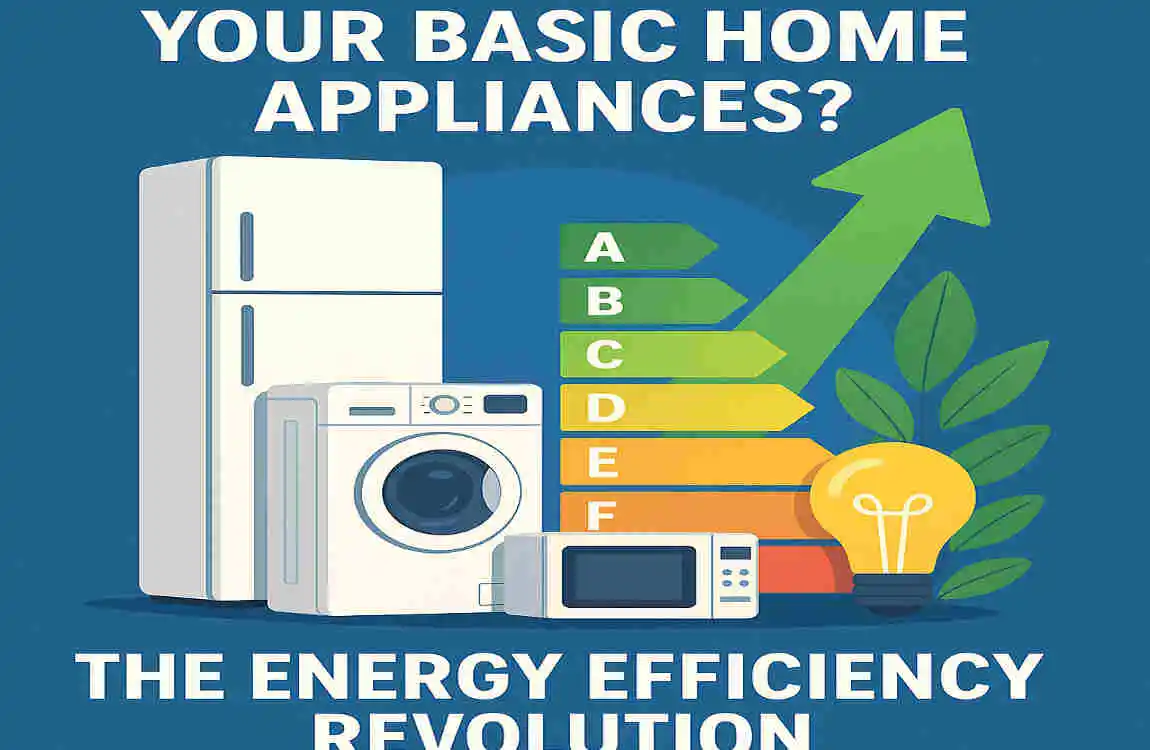
Upgrading your basic home appliances isn’t just a trend—it’s a necessity in today’s world. Older appliances, especially those manufactured before 2010, consume significantly more energy than their modern counterparts. In fact, EPA data shows that pre-2010 appliances can use 30%-50% more energy, costing you hundreds of dollars annually.
Let’s break down the key reasons why upgrading your appliances is a smart move:
Save Money on Energy Bills
Switching to energy-efficient appliances can reduce your monthly utility bills. For example:
- ENERGY STAR-rated refrigerators can save you $50-$100 annually.
- Modern dishwashers use 30% less water and electricity than handwashing or older models.
Reduce Environmental Impact
Energy-efficient appliances are designed to minimize electricity and water usage, helping to reduce greenhouse gas emissions. Upgrading just one appliance can reduce CO2 emissions by 1 ton per year, contributing to a more sustainable future.
Experience Technological Advancements
Today’s appliances come packed with innovative features like Wi-Fi connectivity, app integration, and voice control. Imagine adjusting your dishwasher’s cycle or preheating your oven directly from your smartphone.
Trends in Appliance Efficiency
The rise of ENERGY STAR certification and inverter technology has transformed the appliance market. These features ensure that appliances consume only the energy needed, without unnecessary waste.
A Quick Comparison: Old vs. New Appliances
Here’s a snapshot of how modern basic home appliances outperform older models:
Appliance Energy Usage (Old Models)Energy Usage (New Models)Savings per Year
Refrigerator 500-700 kWh/year 300-400 kWh/year $50-$100
Washing Machine 40 gallons/wash 15 gallons/wash $60-$90
Dishwasher 10 gallons/load 4 gallons/load $40-$70
Top 12 Energy-Efficient Basic Home Appliances for Kitchens
The kitchen is where energy efficiency truly shines. From cooking to cleaning, modern appliances are designed to provide maximum functionality while conserving energy. Here are the top six picks for your kitchen:
Refrigerators (Inverter Models)
Refrigerators are the backbone of any kitchen, but older models are notorious energy guzzlers. Modern inverter refrigerators adjust their compressor speed based on cooling needs, reducing energy consumption by up to 40%.
Key Features:
- French-door designs for easy organization.
- Temperature monitoring to prevent overcooling.
- ENERGY STAR-rated for optimal efficiency.
Savings: Save $50-$100 annually on electricity.
Induction Cooktops
Induction cooktops are a favorite among energy-conscious chefs. Unlike traditional gas or electric stoves, induction cooktops heat pots directly, achieving 90% energy efficiency compared to just 40% for gas stoves.
Key Features:
- Faster cooking times (boils water in 2 minutes).
- No excess heat, making kitchens cooler.
- Safer for households with kids.
Microwave Ovens (Convection Hybrid)
Microwave ovens have evolved into multi-functional tools. Look for convection hybrids that combine microwave and oven functionality, saving energy and space.
Key Features:
- Sensor technology to prevent overcooking.
- ENERGY STAR certification for lower electricity use.
Dishwashers (Soil-Sensing Models)
Soil-sensing dishwashers are the unsung heroes of energy efficiency. They adjust water and energy use based on how dirty your dishes are, eliminating waste.
Key Features:
- Uses 30% less water than handwashing.
- Quiet operation for open kitchen designs.
Washing Machines (Front-Load HE Models)
Modern washing machines, especially high-efficiency (HE) front-loaders, use less water and energy than traditional top-loaders. Their faster spin cycles mean clothes come out nearly dry, reducing drying time.
Air Fryer Ovens
Air fryers are a game-changer for health-conscious kitchens. These compact appliances use 70% less energy than traditional deep fryers while delivering crispy, delicious results.
Top 6 Energy-Efficient Basic Home Appliances for Living Rooms
Your living room is another space where energy-efficient upgrades can make a big difference. Here are six modern appliances to consider:
Smart TVs (OLED/QLED)
Smart TVs equipped with OLED or QLED technology use significantly less power than older LCD models. Additionally, features like auto-brightness adjustments further reduce energy consumption.
Ceiling Fans (BLDC Motor)
Modern ceiling fans with Brushless DC (BLDC) motors consume up to 60% less energy than traditional fans. They’re perfect for keeping your living room cool without relying on air conditioning.
LED Lighting Systems
Replacing traditional light bulbs with innovative LED systems can save you up to 80% on lighting costs. Smart hubs allow you to control brightness and timing with your phone.
Portable AC/Dehumidifiers
For zoned cooling, portable air conditioners or dehumidifiers with inverter technology are excellent alternatives to central HVAC systems. They’re perfect for small living rooms or apartments.
Vacuum Cleaners (Cordless Stick Models)
Cordless vacuum cleaners with low-wattage motors and HEPA filters are not only lightweight and convenient but also incredibly energy-efficient.
Electric Kettles (Auto-Shutoff)
Electric kettles with auto-shutoff features boil water faster and use minimal standby power, saving both time and energy.
Installation, Maintenance, and Smart Integration Tips
Upgrading to energy-efficient basic home appliances is only half the battle—proper installation and maintenance are key to maximizing their performance.
Installation Tips:
- DIY vs. Professional: Simple appliances like air fryers or LED lights can be set up yourself, but larger appliances like refrigerators or washing machines may require professional installation.
Maintenance Tips:
- Clean Filters Regularly: For appliances like air conditioners, cleaning filters quarterly can improve efficiency by up to 15%.
- Keep Coils Dust-Free: Dusty refrigerator coils can increase energy consumption.
Cost-Benefit Analysis and Buying Guide
When considering upgrades, it’s essential to weigh the upfront cost against long-term savings. Here’s a quick breakdown:
Appliance Price Range, Annual Savings, Recommended Brands
Refrigerator $800-$2,500 $50-$100 LG, Samsung, Whirlpool
Ceiling Fan $100-$300 $20-$40 Hunter, Orient
Washing Machine $600-$1,200 $40-$90 Bosch, IFB, Maytag
