
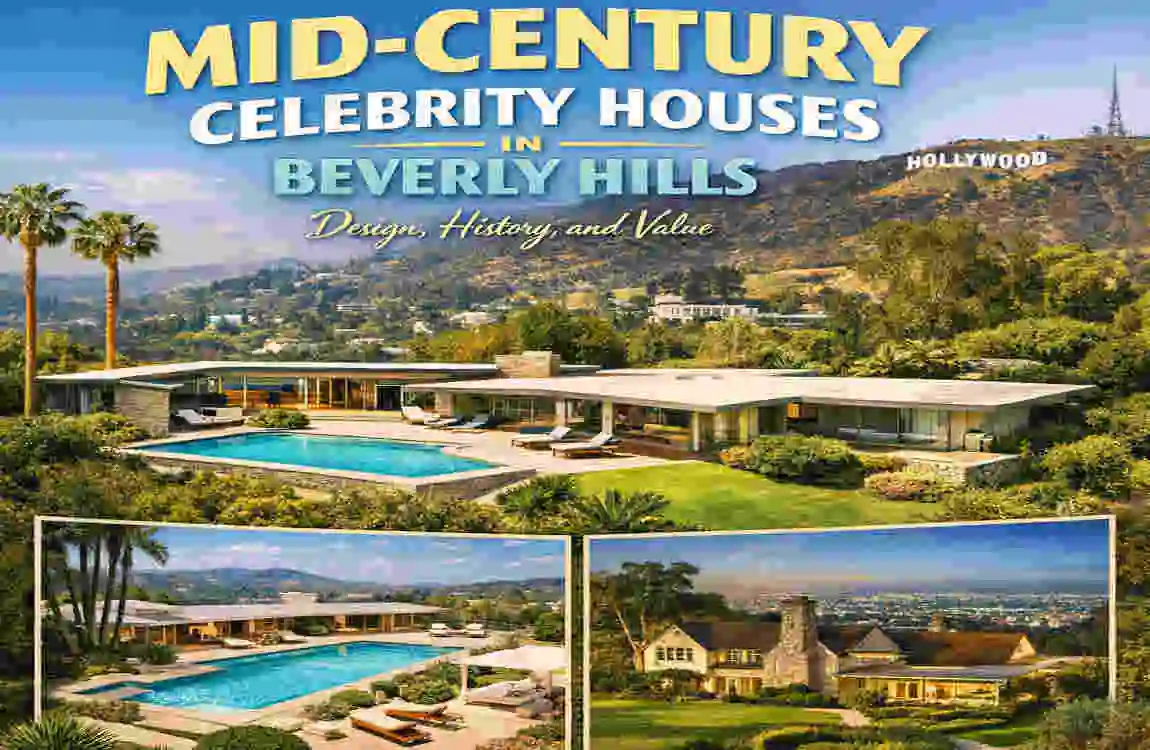
Beverly Hills has long been a symbol of luxury, where million‑dollar streets meet Hollywood fame.
The mid-century celebrity house Beverly Hills vibe blends two powerful forces: the sleek, sun‑kissed design of mid‑century modernism and the glamour of celebrity ownership.
Mid‑Century Modern Architecture in Beverly Hills
What Defines Mid‑Century Modern Design?
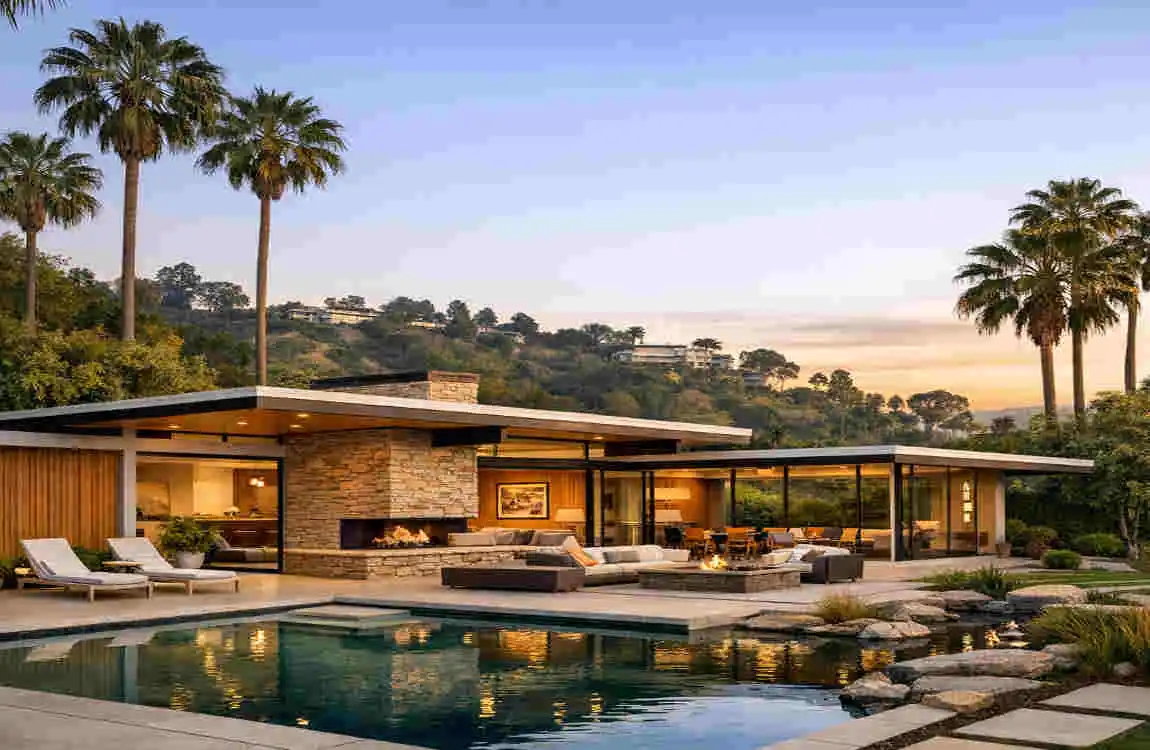
Mid‑century modernism values simplicity, function, and a strong connection to nature. Think clean lines, open floor plans, floor‑to‑ceiling glass, and natural materials like wood, stone, and steel. Large windows frame gardens and city views, while indoor‑outdoor flow makes the home feel larger than the lot.
Why Beverly Hills Became a Mid‑Century Architecture Destination
Southern California’s year‑round sunshine and relaxed lifestyle encouraged architects to break from the ornate mansions of the past. Wealthy entertainers wanted houses that felt fresh, private, and easy to entertain—perfect conditions for the modernist boom of the 1950s and ‘60s.
The Role of Privacy and Indoor‑Outdoor Living
Courtyards, strategic landscaping, and low walls create secluded outdoor rooms without sacrificing light. Pools, terraces, and garden walls give celebrities the seclusion they need while still showcasing a modern aesthetic.
Iconic Mid‑Century Celebrity Houses in Beverly Hills
Celebrity Ownership and Architectural Prestige
When a star lives in a home, the property gains cultural cachet. That provenance can make a house a talking point, but it doesn’t always translate to a higher price tag. True value still rests on architecture, location, and condition.
Notable Mid‑Century Homes and Architectural Examples
Home Architect Era Celebrity Owner Key Features
The Steiner Residence William Ludlow 1958 Marilyn Monroe (early 1960s) Glass wall, flat roof, private garden
The Frank House Richard Neutra 1962 Frank Sinatra (1970s) Open plan, floating stair, desert‑style pool
The Walker Villa John Lautner 1964 Grace Kelly (later) Cantilevered decks, dramatic skylights
The Calder Estate A. Quincy Jones 1960 Elizabeth Taylor (mid‑70s) Brick facade, extensive terraces, built‑in bar
These examples illustrate how design, era, and star power intersect.
The Difference Between Beverly Hills and the Broader Hollywood Hills Market
Beverly Hills, the Beverly Hills Post Office area, Bel Air, and the Hollywood Hills each have distinct zoning, street prestige, and price bands. While online listings sometimes lump them together, a mid-century celebrity house in Beverly Hills gains extra cachet from the city’s iconic zip code and precisely manicured streets.
Design Features That Make These Homes Iconic
Open‑Plan Interiors
Living, dining, and entertaining spaces flow without walls, letting guests mingle freely—ideal for Hollywood parties.
Floor‑to‑Ceiling Glass and Natural Light
Expansive windows frame palms, pools, and city lights, making the interior feel part of the landscape.
Pools, Patios, and Indoor‑Outdoor Connections
A sleek pool sits just beyond the living room glass, while stone patios serve as extensions of the kitchen for al‑fresco dining.
Natural Materials and Minimalist Details
Exposed wood beams, concrete slabs, and metal railings keep the aesthetic honest and timeless.
Landscaping as Part of the Architecture
Geometric hedges, mature oaks, and sculpted stone paths are planned alongside the building, creating a cohesive whole.
The History Behind Beverly Hills Celebrity Homes
Hollywood’s Golden Age and Residential Modernism
The post‑war boom gave studios the cash to commission architects who pushed the envelope. Stars craved homes that reflected their modern image, leading to a wave of experimental residences.
How Celebrity Ownership Creates Real Estate Provenance
A documented star’s name adds a narrative layer—think “once home to Marilyn Monroe.” That story can attract buyers who value heritage, even if the architecture itself is the main draw.
Renovations, Restorations, and Architectural Preservation
Owners frequently update kitchens, technology, and bathrooms. The challenge is to blend modern comforts with original details so the house retains its mid‑century soul.
What Determines the Value of a Mid‑Century Celebrity House?
Location and Neighborhood
Beverly Hills streets like Sunset Boulevard or Rodeo Drive bring prestige, proximity to high‑end shopping, and often better privacy.
Architectural Pedigree
Homes designed by legends such as Neutra or Lautner command extra interest from collectors and design enthusiasts.
Size, Lot, and Amenities
Lot size, pool, guest house, and garage affect market price, but a smaller, impeccably preserved home can outshine a larger, heavily altered one.
Celebrity History and Marketability
Star ownership can spark media buzz and increase foot traffic at open houses, but appraisers weigh it alongside tangible factors.
Renovation Quality and Historic Integrity
Thoughtful restorations that keep original windows, built‑ins, and layout usually preserve or boost value, while gut‑level remodels may deter purists.
Mid‑Century Celebrity House Beverly Hills
How Owners Adapt Vintage Homes for Modern Living
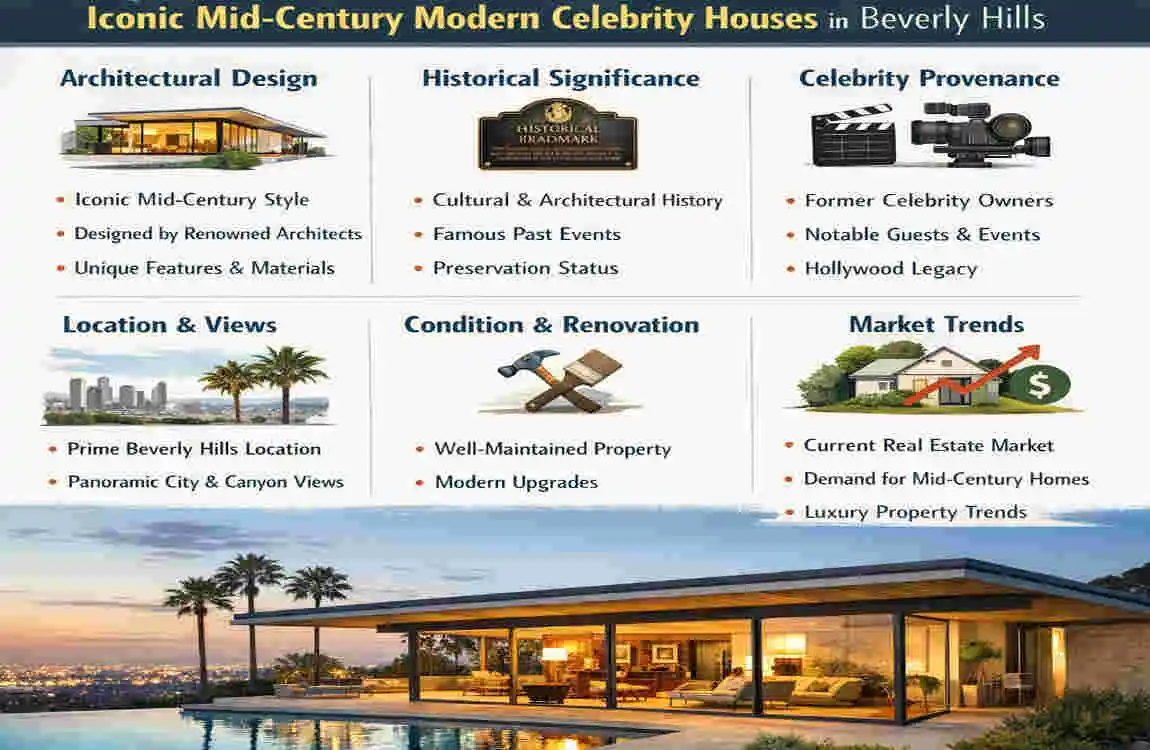
Smart‑home systems, energy‑efficient HVAC, and sleek kitchens are installed carefully, often hidden behind original cabinetry to preserve the vintage look.
Preserving Original Features
Original teak flooring, iconic “Eames” lighting, and custom steel railings are restored rather than replaced, appealing to design lovers.
Balancing Privacy, Security, and Design
Subtle gated entryways, low walls, and discreet security cameras protect the home without compromising the open aesthetic.
Why Buyers and Architecture Fans Continue to Love Mid‑Century Beverly Hills Homes
Timeless Visual Appeal
Clean geometry and natural materials never look dated, keeping these homes fresh in any era.
Connection to California Lifestyle
Sun, surf, and indoor‑outdoor living are baked into the design, matching today’s demand for wellness‑focused spaces.
Investment and Collectibility
While market fluctuations exist, a well‑preserved mid‑century home with proven provenance often retains desirability among niche buyers.
Key Takeaways for Readers Researching Mid‑Century Celebrity Real Estate
- Design matters more than fame – architectural integrity drives value.
- Location is king – Beverly Hills adds a premium layer.
- Preserve while you modernize – keep original details and upgrade wisely.
- Celebrity provenance adds story, not guaranteed price – it’s a bonus, not a guarantee.
- Quality renovations can elevate comfort without erasing history.
Frequently Asked Questions About Mid‑Century Celebrity Houses in Beverly Hills
What is a mid‑century celebrity house in Beverly Hills?
It’s a residence built between 1945‑1970 that showcases modernist design, located in Beverly Hills, and once owned by a well‑known entertainment figure.
What architectural features are common in mid‑century Beverly Hills homes?
Open floor plans, floor‑to‑ceiling windows, natural‑material finishes, sleek pools, private courtyards, and seamless indoor‑outdoor transitions.
Why are mid‑century homes popular with luxury buyers?
They offer a rare blend of historic character, iconic design, and a lifestyle that matches California’s climate and entertainment culture.
Does celebrity ownership automatically increase a home’s value?
Not automatically. It can spark interest and add narrative appeal, but appraisal value still hinges on location, condition, and architectural merit.
Are all celebrity homes in Beverly Hills mid‑century modern?
No. Beverly Hills hosts a range of styles—from Mediterranean villas to contemporary glass towers—alongside mid‑century gems.
Can a historic mid‑century home be renovated?
Yes. Sensitive renovations that respect original layouts, materials, and design intent can modernize a home while preserving its soul.
What makes a mid‑century home historically significant?
Original design by a recognized architect, authentic materials, documented cultural relevance, and a well‑preserved state all contribute to historic significance.
